
Natural Remedy News

A Cleaner Way to Care for Athlete’s Foot & Jock Itch
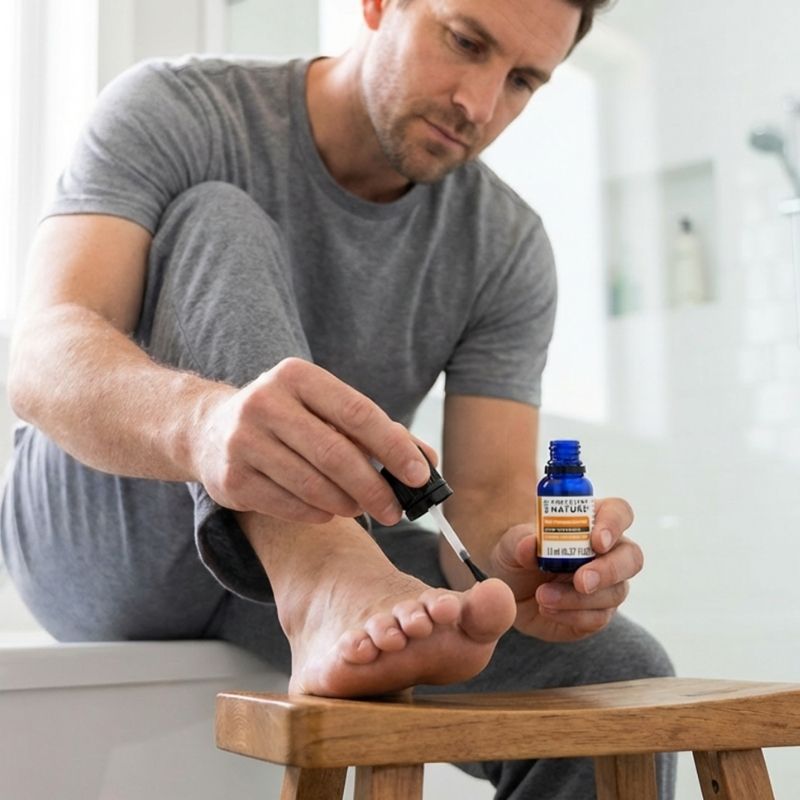
If you are suffering from athlete's foot, you are no doubt anxious to get relief. The thing is that many times an athlete's foot treatment ends up being some kind of cream or powder that is filled with chemicals. Here is the problem with that.
Learn more – A Cleaner Way to Care for Athlete’s Foot & Jock Itch
Ringworm and Your Pets: Understanding the Itchy Intruder
Learn how ringworm affects pets, common symptoms in dogs and cats, how it spreads, and ways to support healthy skin and prevent reinfection.
Learn more – Ringworm and Your Pets: Understanding the Itchy Intruder
Beating the Itch: Your Guide for Dealing with Scalp Ringworm
Discover the ultimate guide to tackling scalp ringworm – from understanding its causes and symptoms to effective treatments and prevention. Learn how to beat the itch and regain a healthy scalp.
Learn more – Beating the Itch: Your Guide for Dealing with Scalp Ringworm
The 7 Best Homeopathic Ingredients to Treat Athlete's Foot
Tinea pedis, commonly known as athlete's foot, is a fungal infection that affects the feet. Dermatophytes are the fungus that causes athlete's foot but can also cause other conditions such as ringworms and jock itch. It's called athlete's foot because the fungus thrives in warm, moist environments such as shoes, socks, and locker rooms.
Learn more – The 7 Best Homeopathic Ingredients to Treat Athlete's Foot
How to Spot and Naturally Treat Toenail Fungus
By Dr. Peter Klapper Ph.D. At last, it’s summertime - the season of sandals and the chance to show off that freshly done pedicure. That might be the thought for some, but if you suffer from nail fungus, the last thing you want to do is showcase your toes to the world. The good news is that toenail fungus can be treated, but first, how did you get it in the first place?WHAT IS TOENAIL FUNGUS? Toenail fungus, also known as onychomycosis, can be challenging to treat, especially if it’s been left untouched and has spread. The problem is that the infection can go along time without anyone noticing because they tend to be painless until it gets to the point of wreaking havoc on your nail. It is highly contagious and notoriously difficult to treat as it burrows into the nail and nail bed. It’s also important to know that there are three main types of toenail fungus, opens in a new tab all in which infect the toenail differently based on the nature of the fungus.The three are as follows:Subungual Onychomycosis: the same type of fungus that causes athlete’s foot infection stars under the skin underneath the nail.Candida Onychomycosis: a toenail fungus that is caused by yeast, although it is less common to be found in the nails.White Superficial Onychomycosis: this type of infection occurs only on the top layer of the nail and appears as white spots. It’s the easiest to get and the easiest to treat. But, if left untreated, can cause the nail to become rough and crumbly.So, how can you avoid these? Well, fungus tends to linger in damp areas, opens in a new tab - More about nail fungus causes on mayoclinic.org such as community pools, gyms, and locker rooms. It’s a good idea to keep your nails trimmed short, always wear shoes if possible, and to frequently change sweaty socks and shoes, especially in the summertime.WHAT DOES THE COLOR OF MY TOENAIL INDICATE?No, we’re not talking about your hot pink toenails, but the color of your unpolished nail. Of course, what you’d like to see is the translucent nature of the nail, but what if it’s black, yellow, white or green?Yellow ToenailIf you have noticed that your toenail has turned to a yellow tint, you may want to look into purchasing an antifungal treatment, because fungus is likely the culprit.Green ToenailWe hate to say it, but if your toenail is green in nature, it’s likely the nail is infected with bacteria. Green-nail syndrome, known as Chlronychia, opens in a new tab - Chlronychia information on webmd.com, is when the infection has inhabited underneath the nail. This bacterium is usually picked up in damp and wet conditions, so knowing the cause of the infection can help with the course of treatment.White ToenailHave you noticed a bunch of white spots on your toenails? The culprit is likely White Superficial Onychomycosis. As we stated above, this form of toenail fungus shows up in white spots or powdered like patches. If you see this on your nails, treat it sooner than later before it causes your nail to become crumbly.Black / Dark DiscolorationIf your toenail appears black or dark, it can be from the cause of physical trauma to the toe. Whether it’s a bruise or dried blood, it should clear up on it’s own. However, in some cases, a brown streak on a toenail can indicate something more serious such as an inflammatory condition or melanoma. It never hurts to get it checked out by your doctor.HOW TO TREAT TOENAIL FUNGUSIf you’re looking for a natural, effective way to not only treat your toenail fungus, but to restore brittle and discolored nails, try our natural nail fungus treatment. It delivers a curative effect to nail fungus infections via topical application. The lipophilic properties of the oils we use readily absorb into cell membranes of nails due to their low molecular weight. This is critical as the infection resides in and under the cells of the nail.
Learn more – How to Spot and Naturally Treat Toenail Fungus
How To Prevent Ringworm in Athletes
Learn how athletes can prevent ringworm, how it spreads, and natural care options to support healthy skin in locker rooms and sports settings.
Learn more – How To Prevent Ringworm in Athletes
Understanding Ringworm in Animals: A Comprehensive Guide
By Dr. Peter Klapper Ph.D. It’s no secret that most of us think of ringworm as an infection that is common in athletes. Despite its ubiquitous name, the fact is that ringworm can affect anyone ranging from babies to the elderly and surprisingly – animals.That’s right. Animals can also be the host to skin infections such as ringworm. And it doesn’t discriminate. Many species of animals can become infected including dogs, cats, cattle, sheep, goats, pigs, rodents, rabbits, and birds. So, whether you live in the city or in a rural area, it’s possible to come into contact with an animal that has ringworm.How Do Animals Get Ringworm?It’s not like your cat or dog is spending time at the public pool, so how does an animal get ringworm? Well, the fungi that causes ringworm, opens in a new tab live in ineffective spores in the environment and direct contact can lead to an infection. With animals, spores may be living on the hair of an infected animal, or any items used at the vet or kennels such as brushes or clippers.Also, strangely enough, while there is no sex or age predisposition of ringworm in animals, Persian, Himalayan and Rex cats, and Yorkshire and Jack Russell terriers, are overrepresented in published studies looking at the dynamics, opens in a new tab of ringworm infections.For animals such as livestock or cattle, opens in a new tab, ringworm is likely to happen from being kept in their stalls in the winter and rubbing up against wood and other stall materials.How Do You Treat Ringworm in Animals?While our products work great on treating ringworm in humans, we do not recommend using them on animals without consulting a veterinarian first. (FYI - We don’t test on animals, only humans.)That said, if your animal has contracted ringworm, what should you do? First off, it’s important to know that after exposure, it will take two to four weeks for your animals to show signs of infection. You might notice hair loss or crusts and scales developing, opens in a new tab on the skin that seem to be an irritant for your animal. If you can get a closer look, you’ll even notice that the red irritated area will be in the shape of a circle or ring in your animal’s fur.If this sounds like your animal, contact your vet immediately to get your pet treated. How To Protect Your AnimalGenerally, ringworm is often seen in animals with a weak immune system. If your animal has any immunity conditions, try to keep them in a clean environment. Also be mindful of puppies and kittens. Their immune systems are so new that they need to be kept in a clean area to reduce the risk of infection, opens in a new tab.How People Can Contract from AnimalsUnfortunately, yes, it can happen. If you have encountered any animal about Understanding Ringworm in Animals: A Comprehensive Guide (article), opens in a new tab that has been infected with ringworm, chances are you can get infected, too. Ringworm is contagious and can be passed between animals or people by direct skin contact or by touching contaminated objects such as combs, bedding, food bowls, furniture, or other surfaces. The best way to prevent an infection is to keep all areas clean, or if you have to come into contact with your animal, wear gloves.If you have been exposed, ringworm can be treated with our natural ringworm product, opens in a new tab. Check out a foster cat mom’s experience below. “I contracted a horrific case of ringworm from some cats I was fostering. It was on both arms, hands, fingers, my face!!, legs, butt and boobs. Yes, boobs. I looked like someone burned me with a cigarette all over my body. I was desperate to get it under control. Did a ton of frantic research and stumbled on this product. It started to work immediately!!! I saw a difference every 24 hours!! I put it up on every spot 2 - 3 times a day. Each spot got dryer and dryer and shrunk in size! I had been using Lotrimin which did not make one difference. So glad I ordered this and stopped wasting my time with the Lotrimin. This product is a game changer!” – Review by Stephanie L.
Learn more – Understanding Ringworm in Animals: A Comprehensive Guide
Scalp Ringworm in Children: Early Signs, Causes & Natural Care Options
Scalp ringworm, also known as tinea capitis is one of the most common fungal skin concerns in children, especially those in school or daycare settings.
Learn more – Scalp Ringworm in Children: Early Signs, Causes & Natural Care Options
Did You Get Nail Fungus from Your Local Nail Salon?
Did you notice nail fungus under your toenail after a manicure or maybe you got nail fungus from acrylic nails, either way nail fungus is contagious and can spread in salons if equipment is not properly cleaned.
Learn more – Did You Get Nail Fungus from Your Local Nail Salon?